
What the rejected COP31 draft said about fossil fuels and finance
Countries did not adopt the proposed deal in Antalya. This morning’s report records what was in the draft before the closing plenary.
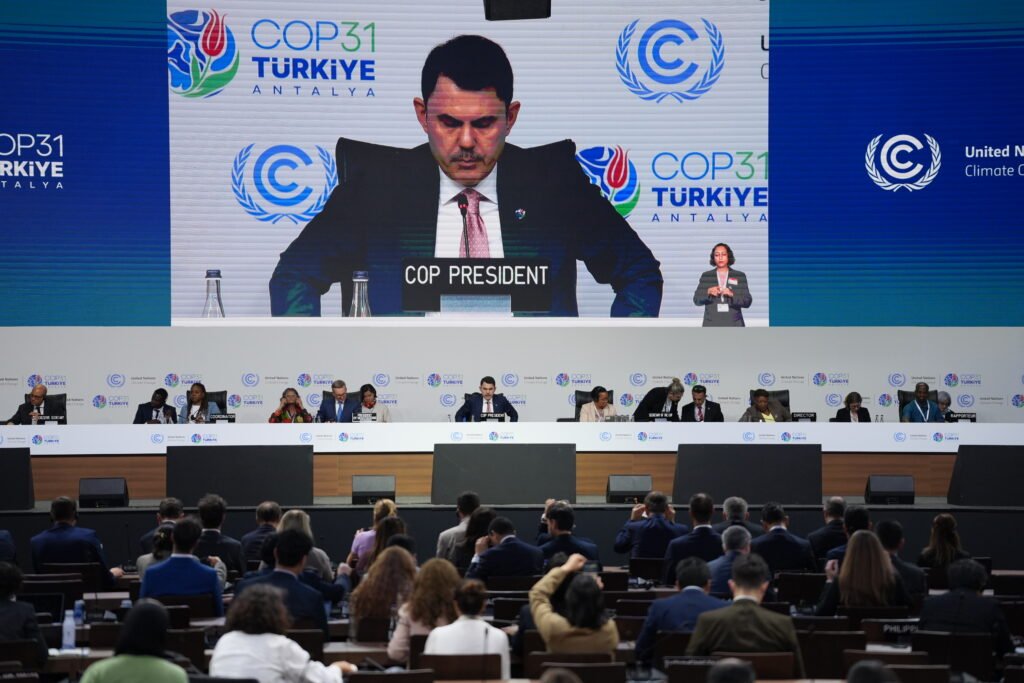
Update, 22 November 2026. The European Union and other delegations rejected the draft. COP31 president Murat Kurum told the closing plenary that it had not been adopted. Reuters’ report from Antalya.
The draft as reported on Sunday morning
Countries at the UN climate summit in Antalya were due to approve a final deal on Sunday 22 November, two days after the talks were meant to end. The text in front of them does not mention fossil fuels.
Instead, its opening line recalls “the United Arab Emirates Consensus in its entirety”, RTÉ reported. That is the 2023 Dubai agreement, in which countries agreed to transition away from fossil fuels in their energy systems. The second draft, issued on 19 November, had already removed every mention of fossil fuels after objections from oil producers including Saudi Arabia. About 130 countries wanted the language restored, according to Outlook India.
What happened to the money
The text keeps the call to at least triple adaptation finance by 2035. It drops the $120 billion figure that appeared in Monday’s draft. In its place the Standing Committee on Finance must produce a technical report before COP32 in November 2027, and the COP31 and COP32 presidencies will lead a new “Antalya to Addis Ababa” roadmap on adaptation finance.
Adaptation money pays for flood defences, drought-resistant crops and early-warning systems in the countries hit hardest. Our explainer from last week sets out who pays and why the target matters.
Who said what
Turkey’s Murat Kurum, the COP31 President, told a late-night plenary: “We believe that we have put forward a text which all the parties can agree upon.” Australia’s climate minister Chris Bowen led the negotiations.
Mohamed Adow of the think tank Power Shift Africa said countries had come to Antalya expecting progress on finance, adaptation and fossil fuels, and were instead trying to stop governments going back on earlier commitments.
The next summit, COP32, is in Addis Ababa in November 2027.