
Friday the 13th: Outlook, Outage and Outrage
Unlucky for some, an adult snow day for others. Outlook went dark, Teams went quiet, and Birmingham’s police, hospitals and councils found out what happens when one company’s email stops working.

If you handle Outlook on a daily basis, especially as part of your job, you probably landed somewhere on the scale of inconvenienced to enraged last Friday.
For the best part of a day, a huge chunk of the working world ground to a halt. Emails didn't arrive and Teams meetings didn't happen, and for once nobody could blame the Wi-Fi.
Brum felt it
West Midlands Police, West Midlands Fire Service, councils across the region, hospitals and GP practices were all hit, according to BirminghamWorld. West Midlands Ambulance Service said its email was down "along with many others around the world," and some Birmingham city councillors told residents to text them because they couldn't get into their inboxes.
West Midlands Fire Service was quick to reassure the region. "Our 999 emergency call handling and frontline firefighting and rescue services are continuing as normal," a spokesperson said. "If you need us in an emergency, we will be there."
Birmingham and Solihull Mental Health NHS Foundation Trust warned people to expect delays in hearing back. Sandwell and West Birmingham Hospitals told patients to keep turning up to appointments unless contacted.
Nationally, it was worse. Senior health sources told the Guardian that some operations and appointments were cancelled, and the BBC reported anecdotal accounts of c-sections being called off. Rachel Harrison, national secretary of the GMB union, said staff in 111 and 999 couldn't refer patient details in the normal way, creating "a massive backlog," though emergency call-outs appeared unaffected. Pharmacies lost access to NHS email, and Olivier Picard, chair of the National Pharmacy Association, warned it could keep some patients in hospital longer. "Now, if we can't receive the email, we can't prepare the medication," he said.
And if you were trying to email a lecturer, a landlord or your personal tutor on Friday, you already know how that went.

What actually happened?
At around 6pm on Thursday 12 November, Microsoft said it was investigating reports of people in the Americas being unable to get into their Exchange Online mailboxes. Exchange Online is the Microsoft service behind email and calendars, and Outlook, Teams and Copilot all lean on it.
According to Downdetector, reports reached 74 countries within about an hour, and Outlook complaints peaked at nearly 140,000. Microsoft's first fixes were "not taking as expected." By the time Britain woke up on Friday the 13th, of all days, Outlook and Teams were still down across much of the globe.
Microsoft apologised on Friday afternoon, nearly 24 hours after it all began. "We are deeply sorry for the disruption this incident has caused our customers and partners," the company said.
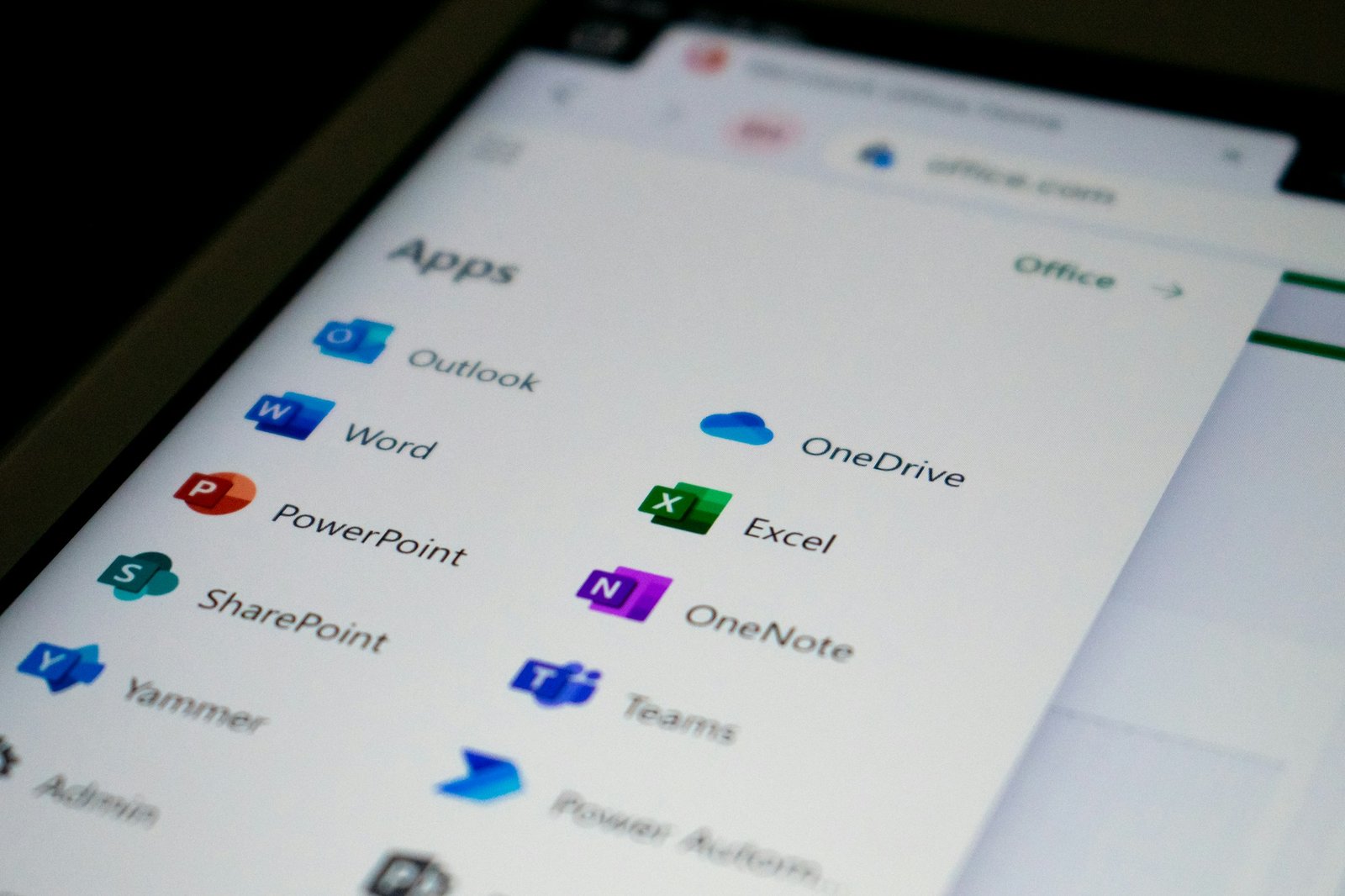
So, was it all down to one glitch?
Well, sort of. For those wondering how, imagine a network and all of its data traffic like motorway traffic. When a few lanes suddenly close, everything has to divert into the lanes that are left. Those lanes get congested and grind to a halt, the traffic shifts again, and before long the whole road is stuck, waiting for lanes to reopen.
That is roughly what Microsoft described. Some of its servers started failing automated health checks and dropped offline. Their traffic was pushed onto the servers still running, which then buckled under the extra load, and the domino effect spread from there.
Why the lanes closed in the first place is less clear. Microsoft says the incident "was introduced by an issue during an earlier network capacity upgrade that surfaced following a recent network change." Put simply, a change it made earlier came back to cause problems. It has promised a full post-incident report.
The adult snow day
NBC News reported people on social media openly hoping email would stay down on Friday so they could have the day off. For a lot of office workers it was an adult snow day, with no email, no Teams and a cast-iron excuse for anyone who wanted to write the day off.
Which is funny, until you remember the ambulance backlog.

Why it matters
Microsoft had most of its services back by Friday evening. The dependency that turned a server problem into an NHS problem is still there.
A network change at one American company held up patient referrals from 111 and 999 staff in England, led to cancelled operations, and left Birmingham councillors and West Midlands Police working around a dead inbox. Nobody in Brum voted for that. It built up one contract at a time.
We have been here before. In July 2024, a faulty CrowdStrike update crashed Windows machines around the world, and NHS England said it hit the appointment and patient record system used across the health service. Microsoft 365 then went down for around eight hours in January this year, and again in July. On Friday, much of the NHS calendar was still linked to Microsoft.
Cyber minister Baroness Lloyd of Effra said she had spoken to Darren Hardman, chief executive of Microsoft UK, and that the outage mainly affected "back-office functions." She acknowledged "limited reports of impact on frontline service delivery." The GMB union, whose members work in 111 and 999, described a massive backlog with the potential for chaos. It is hard to square those two accounts. If 999 staff being unable to pass on patient details counts as back office, then the government's definition of back office needs looking at.
Then there is the question of staffing. Microsoft's apology went out of its way to say the outage was "not related to cyber or AI / agents," which is an interesting thing to deny when nobody had officially accused it. Since May 2025, the company has announced more than 15,000 job cuts in two rounds, then a further 4,800 in July this year, after offering voluntary buyouts to around 9,000 US staff. Over the same period it projected $190 billion in spending for 2026, much of it on AI infrastructure. Microsoft's chief people officer, Amy Coleman, said the roles cut in July "are not being replaced by AI."
We are taking her at her word, because there is no evidence to the contrary. But it is fair to ask whether a company that keeps cutting staff while spending enormous sums on data centres has enough experienced people in the room when its systems fall over. Microsoft's January outage was fixed in about eight hours. This one took nearly a day, and several of its fixes failed along the way. We would like that question answered in the post-incident report, not brushed aside in a statement on X.
Big tech is not the only one that put all its eggs in one basket. Hospitals, police forces, councils and universities have handed their most basic way of communicating to a single supplier and treated it like a utility. Baroness Lloyd says the incident will feed into the government's work on the Cyber Security and Resilience Bill. That work should start with a simple question for every public body in Birmingham: if Microsoft goes down again on Monday, what is the plan B?
References
All sources accessed on 14 November 2026.
- Abrams, L. (2026). Massive Microsoft 365 outage disrupts Outlook, Teams, Copilot worldwide. BleepingComputer.
- ABC News (Australia) (2026). Microsoft outage hits users worldwide, affecting Teams, Outlook and Copilot.
- ABC7 (2026). Microsoft outage live updates: What to know as service is being restored.
- Birmingham and Solihull Mental Health NHS Foundation Trust (2026). Due to the global Microsoft outage there may be delays in our response to you.
- Birmingham Now (2026). Microsoft outage disrupts police and pharmacy services.
- BirminghamWorld (2026). Microsoft outage hits West Midlands fire, police, hospitals and councils.
- CNN (2026). Microsoft says email service is ‘approaching normal levels’ following widespread global outage.
- Fortune (2024). Microsoft outage: NHS, airlines and banks hit. Live coverage of the CrowdStrike incident, 19 July.
- Fortune (2025). Microsoft lays off 9,000 in AI drive, bringing total job cuts to 15,000 this year.
- NBC News (2026). Microsoft services hit by major outage across the world.
- Newsweek (2026). Microsoft Blames ‘Technical Issue’ After Outage Impacts Global Operations.
- BBC News (2026). Microsoft says it is ‘deeply sorry’ for global outage after almost 24 hours of disruption. Live coverage.
- Phillips, A. and Boyd, A. (2026). NHS, schools and police forces hit by Microsoft outage. BBC News.
- The Guardian (2026). How Microsoft outage has affected key public services in the UK, 13 November.
- Brit Brief (2026). Microsoft outage could extend hospital stays and delay prescriptions, pharmacist warns. Reporting the Daily Mirror.
- Express & Star (2026). Microsoft outage hits West Midlands fire, police, hospitals and councils.
- Reuters (2026). Microsoft joins AI-driven tech layoff wave with 4,800 job cuts, 6 July. GV Wire.
- Sandwell and West Birmingham Hospitals NHS Trust (2026). Microsoft Outage: Hospital remains open.
- TechRepublic (2026). Microsoft's 8-Hour Outage Leaves Thousands Without Email.
- The Scotsman (2026). Microsoft apologises as Scottish government activates resilience operations amid outage.
About the author

Phoebe Allen
Phoebe Allen is a cyber security student currently completing a placement year at Pfizer. In her spare time, she enjoys reading, playing chess and, of course, writing articles.